

Altogether, already eight articles from the FCM project (some of them in cooperation with other projects) have been published. To make it easier to find them, we have now compiled a reference library for the FCM project.
Jukka Miettinen
51 posts
Thank you all for attending the Forestry TEP FCM toolset webinar yesterday! The slides presented in the webinar are now available.
On the 16th of April 2026 (10:00-11:00 CEST), we are organizing an introductory webinar for everybody who is interested in using the FCM tools. If you are wondering whether these tools might be beneficial for you and where you could access them, this webinar is for you. The presentations (see agenda below) will describe the selection of tools, provide highlights of selected tools and inform how users can access the tools. Online demonstration of the functionality of the tools will be included.
Last year has seen major shifts in EU policy-making processes, most notably the withdrawal of the legislative proposal for an EU Forest Monitoring Regulation in October 2025. Simultaneously, debates and delays surrounding the EU Deforestation Regulation (EUDR) have created some level of uncertainty concerning the future of this policy. Meanwhile FCM stakeholders may wonder how the regulatory volatility may influence requirements for EO-based monitoring services.

As unbelievable as it sounds, we have come to the end of the ESA Forest Carbon Monitoring project. It has been a long and rewarding journey. Over the past four years, the project designed and implemented a toolset for remote sensing-based forest structure and biomass monitoring. The toolset offers a selection of statistically robust methods for forest monitoring and carbon accounting, aiming to meet the varying requirements of different stakeholders.
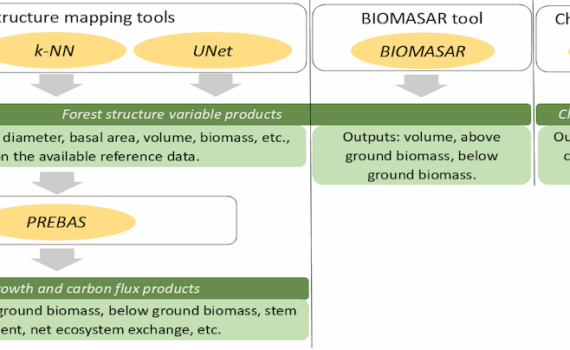
The Forest Carbon Monitoring (FCM) project has been designing and implementing a versatile set of tools for EO-based forest structure and biomass monitoring. In the anticipation of the imminent publication of the FCM tools, we are happy to make available the FCM Algorithm Theoretical Basis Document (ATBD). This document provides the scientific basis for the tools implemented in the project.
Next week, the European Environment Agency (EEA) and the European Space Agency (ESA) will organize the second edition of the conference on Earth Observation for Monitoring, Reporting and Verification of Carbon Removals (EO4MRV). Held in Copenhagen, Denmark, on the 7-10 October 2025, the conference will bring together experts from across disciplines (scientific research, national GHG inventories, policy, and the private sector) to share insights, innovations, and experiences that support robust MRV (Monitoring, Reporting, and Verification) systems for carbon removals in the EU.
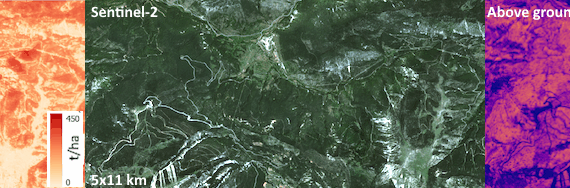
Over the past years, the Forest Carbon Monitoring project (FCM) has been pioneering remote sensing-based, user-centric approaches for monitoring forests. By combining satellite imagery with reference data and scientific rigor, the project has been shaping a new era of forest carbon monitoring that is not just innovative, but practical and scalable.
The summer holiday season starts to be over, and we are entering the final three months of the Forest Carbon Monitoring (FCM) project. Publication of the FCM tools is one of the main objectives for the remaining time. You may have seen the term Forestry TEP mentioned several times on the FCM website. It is the processing platform where the FCM use case demonstrations have been run. It will also be the main interface to access the FCM tools after the project has ended.

At the Living Planet Symposium 2025, a packed Room 0.14 came to life early Thursday morning as stakeholders from across the forest, climate, and remote sensing sectors gathered for a networking session titled “Unlocking the Power of EO for Forest Carbon Monitoring.” Hosted by the European Space Agency’s Forest Carbon Monitoring (FCM) project, the session combined expert presentations, dynamic panel discussions, and audience engagement, showcasing how Earth Observation (EO) is transforming forest biomass and carbon monitoring.