
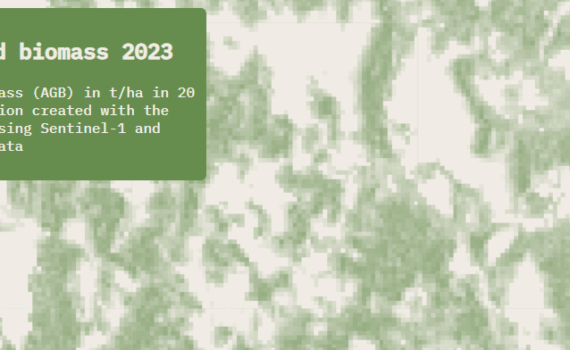
One of the main objectives of the FCM project continuation was to extend the temporal range of the pan-European growing stock volume (GSV), above ground biomass (AGB) and below ground biomass (BGB) maps. We are happy to announce that this objective has been achieved as a set of new pan-European maps have been made available in the FCM product portal.
Carbon Monitoring
47 posts
Forests play a vital role in regulating our climate, but monitoring their health and carbon storage is no simple task. In a new video from the Forest Carbon Monitoring (FCM) Project, users from two very different regions — Catalonia in Spain and the Colombian Amazon — share how they are working with the project’s Earth Observation tools to improve forest management and support climate action.

Join us at the upcoming Living Planet Symposium (LPS 2025) for a dynamic networking session showcasing our European Space Agency’s Forest Carbon Monitoring (FCM) project and our versatile toolset for Earth Observation (EO)-based forest biomass and carbon monitoring. Designed to support a wide spectrum of forestry stakeholders, our FCM tools address key needs from policy compliance reporting (e.g. CRCF, LULUCF), voluntary private-sector reporting, to scientific applications including digital twins and ecosystem analysis.
Last autumn, we had a visiting scientist from the University of Oviedo staying here at VTT. This gave us a great opportunity to test some of the FCM tools in his study areas in northern Spain, and thereby provided valuable information on the applicability of the methods in new areas.
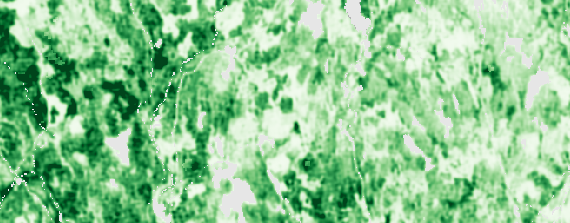
One of the main objectives of the continuation phase of the FCM project is to include a deep learning method in the tool portfolio. Based on earlier experiences, the UNet model family approaches were selected. A vanilla UNet model as well as a more advanced SeUNet model with a squeeze-excitation block have been tested and further developed in the Catalonia and Norway demonstration areas. The idea is to
EO data products are sensitive to variations caused by atmospheric or seasonal effects, sometimes significantly affecting forest variable predictions. When used repeatedly in the same area to monitor the development of forest resources these effects can cause inconsistencies in the time series. The Data Assimilation (DA) approach to be demonstrated in the Norway use case aims to mitigate these inconsistencies of forest variable values in the monitoring time series.
As you may remember, the European wide biomass mapping in the FCM project is conducted with the BIOMASAR approach developed by Gamma Remote Sensing. The same approach is used for the global biomass mapping conducted in the ESA CCI Biomass project. In the FCM project, the method is finetuned for European conditions and high resolution (20 m ) mapping. The approach is based on growing stock volume (GSV) estimation, which is subsequently converted to above and below ground biomass. The mapping uses only spaceborne radar sensors.
With all the challenges that the world is facing nowadays, it is increasingly important that science is closely integrated into our thinking and our everyday lives to support the choices we make. To highlight the significant role of science in society and the need to engage the wider public in debates on emerging scientific issues, the United Nations celebrates the annual World Science Day for Peace and Development on the 10th November. The day aims to underline the importance and relevance of science in our daily lives.

While waiting for our Colombian field crews to finish their work in the jungle, we would like to highlight why these kinds of field measurement campaigns are so important. Nowadays, with the increasing need for information on forest biomass to meet compliance and voluntary reporting requirements, many people look into satellite data as the saviour.
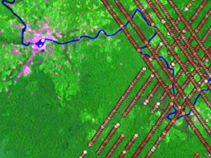
Perhaps one of the most exciting demonstrations to be conducted during the FCM continuation is the Colombian use case. The overall aim is to highlight the feasibility of the FCM methods to meet the requirements of the new Verra Verified Carbon Standard (VCS) for REDD+ projects.